CBM-AMP helps maintenance teams turn condition-monitoring findings into structured, risk-informed and accountable maintenance decisions. It guides users through maintenance priority, continued operation, operating controls, reassessment requirements and intervention planning.
Turn CBM Findings into Controlled Maintenance Decisions
From CBM Finding to Maintenance Decision
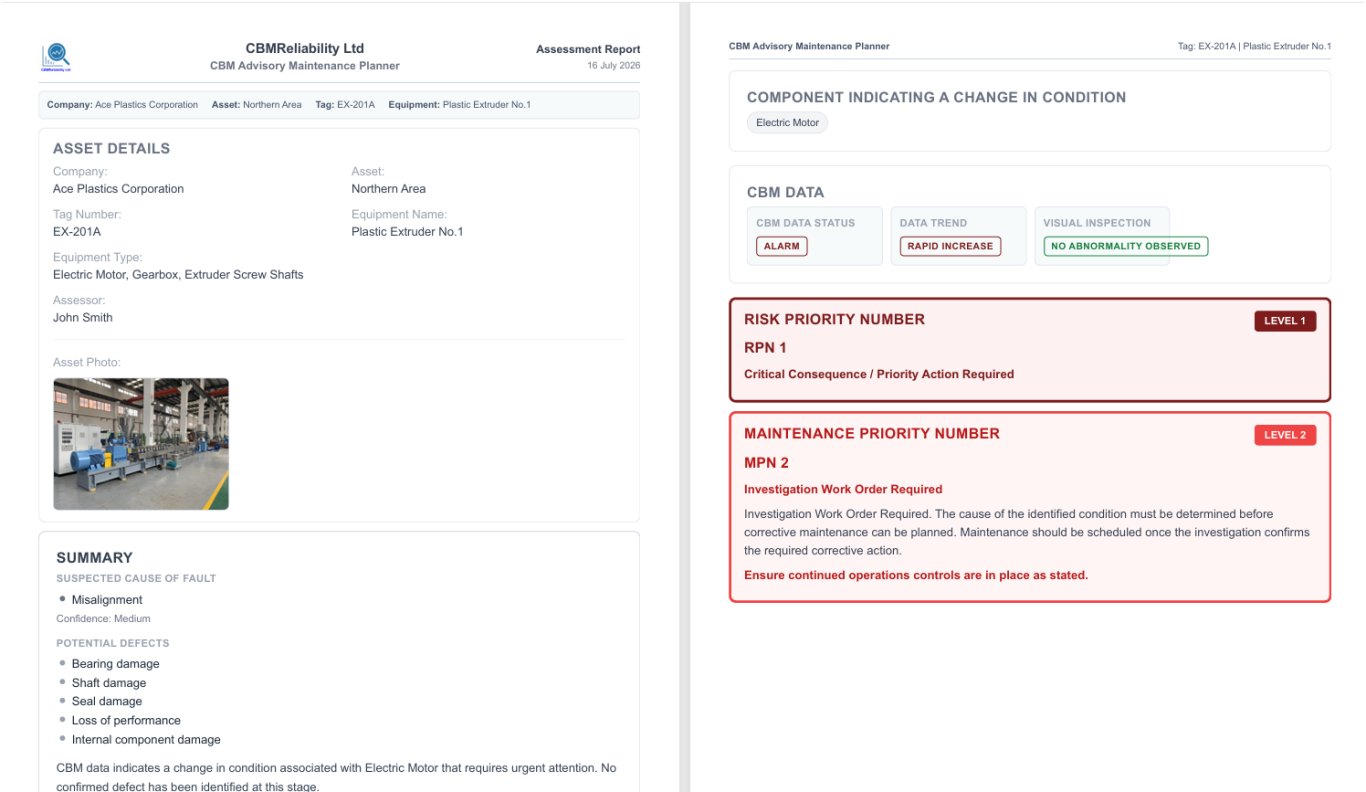
A CBM report may identify a developing fault, but the difficult decisions come next: How urgent is it? Can the equipment continue operating? What controls are required? When must it be reassessed, and who is accountable for taking action? CBM-AMP provides a structured and consistent process for answering these questions.
HOW CBM-AMP WORKS
2. Capture the CBM Finding
Record the reported condition, data status, trend behaviour, diagnostic confidence, suspected fault and confirmed defect information.
1. Establish Asset Criticality
Record the asset details and assess the consequence of failure across safety, production, environmental and operational categories.
3. Determine Priority and Risk
CBM-AMP generates clear Maintenance Priority and Risk Priority levels to support consistent and informed decision-making.
4. Control and Plan the Response
Define continued-operation controls, monitoring frequency, reassessment dates, escalation triggers, accountability and intervention requirements.
PRIORITY AND RISK
Clear Maintenance and Risk Priorities
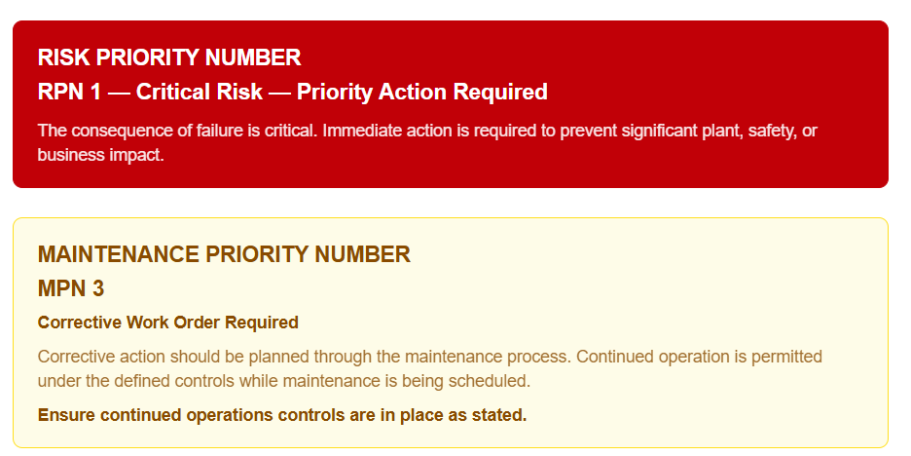
CBM-AMP separates the urgency of the maintenance requirement from the operational consequence of failure. The Maintenance Priority Number identifies what action is required and how quickly it should be completed, while the Risk Priority Number shows the potential consequence and business / operational risk.
CONTINUED OPERATIONS
Controlled Continued Operations
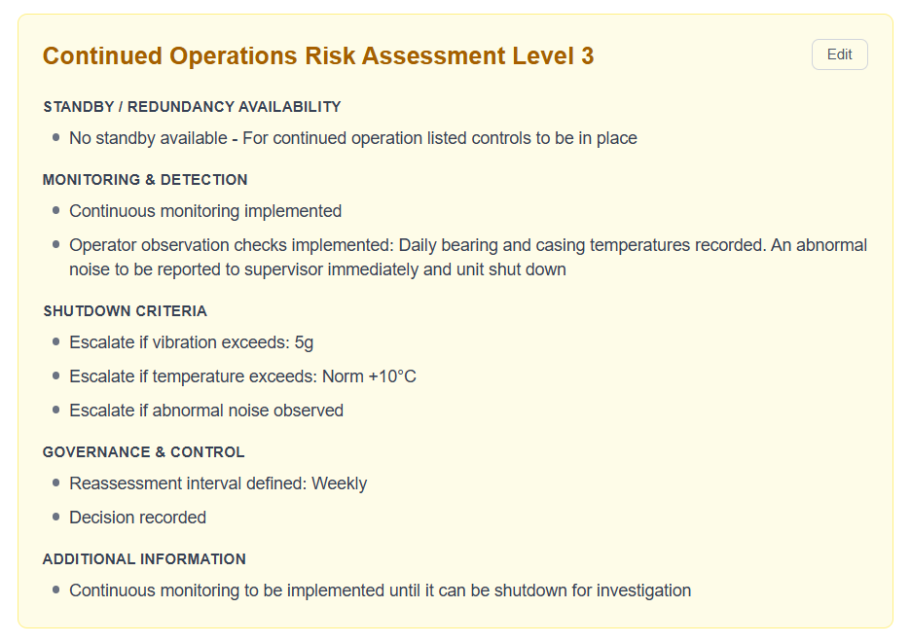
Where immediate intervention is not practical, CBM-AMP guides the user through a structured continued-operations risk assessment. It determines whether the equipment can remain in service and defines the operating controls, monitoring requirements, reassessment timings and escalation conditions required while operating with a known fault.
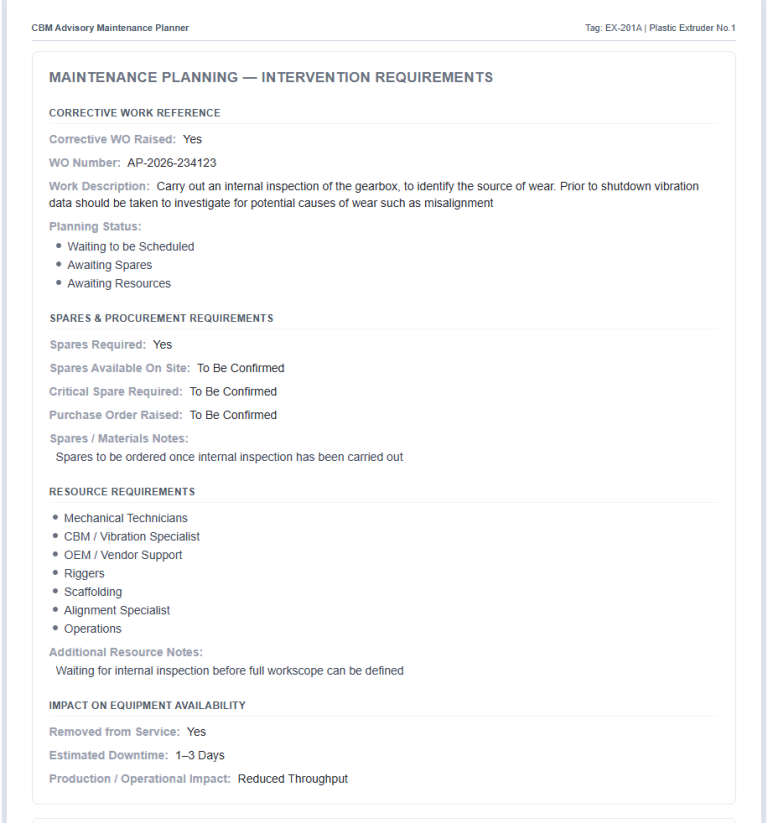
From Risk Decision to Planned Action
Once the maintenance and operational risk priorities have been established, CBM-AMP turns the decision into a practical intervention plan. This helps maintenance teams prepare early, maintain accountability and act before the condition becomes urgent.
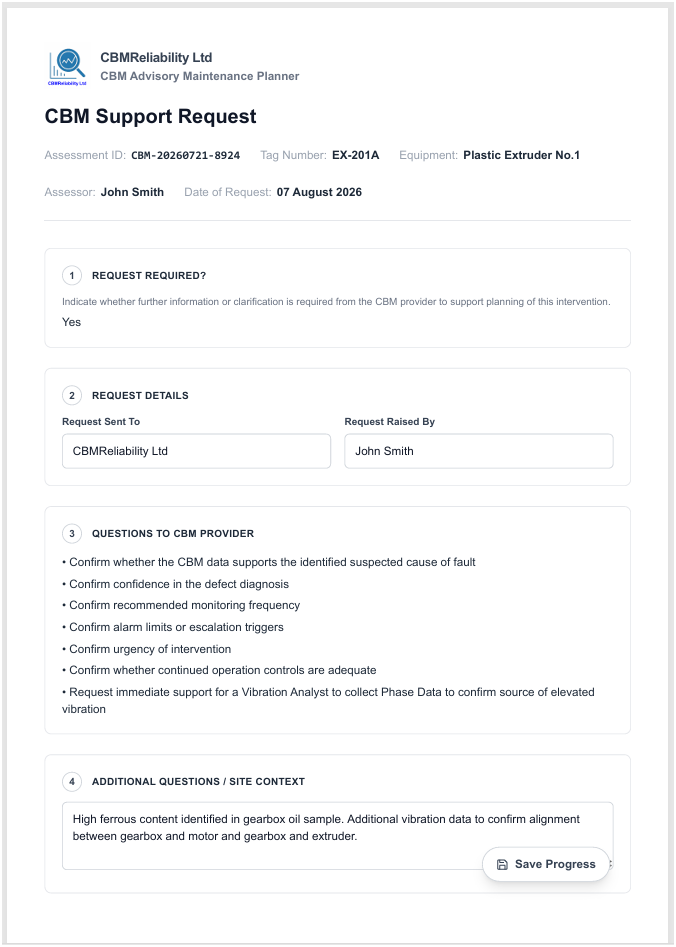
CBM TECHNICAL SUPPORT
Close the Information Gap
Where a CBM report does not provide enough information to support a confident maintenance decision, CBM-AMP identifies what is missing and creates a structured CBM Support Request.
This helps maintenance teams ask the CBM analyst the right technical questions and obtain the additional information needed before deciding whether to monitor, investigate or intervene.
Examples may include requests for trend data, diagnostic confidence, defect progression, phase information, additional vibration measurements, oil/grease analysis or further investigative testing.